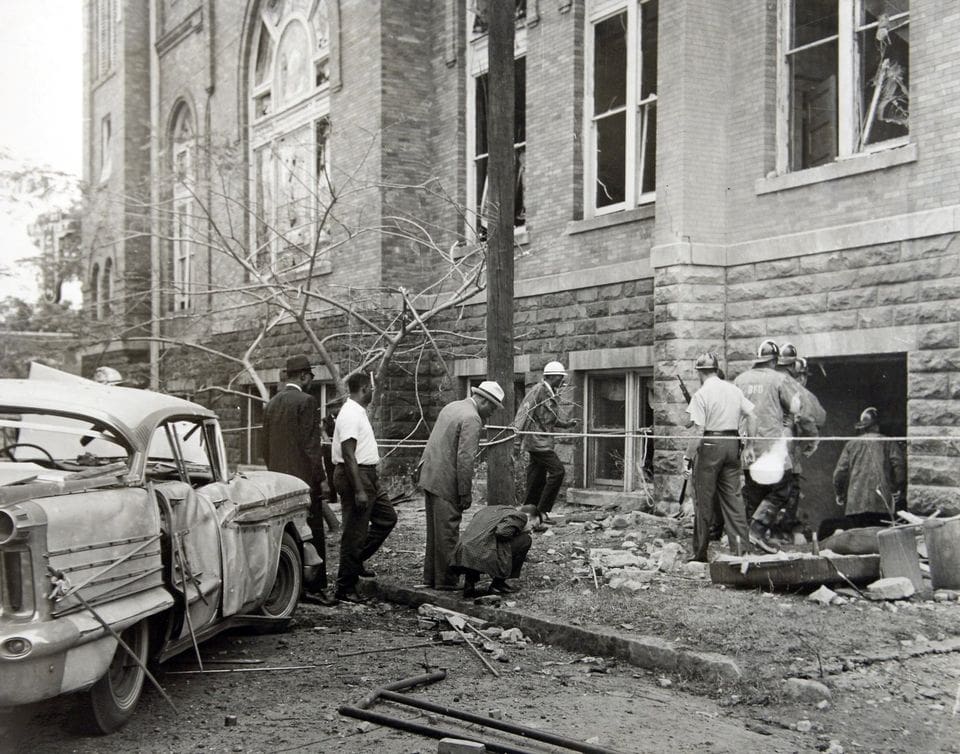
As MLK Jr. Day is approaching, we thought it would be appropriate to share Nina Simone’s protest song, “Mississippi Goddam.” The lively, up-tempo music of the song masks its much darker subject – the 16th Street Baptist Church bombing, a white supremacist terrorist attack in 1963 that killed four young girls. Simone’s song, a response to the event, laments the deaths of the young girls while also condemning all forms of racial discrimination and oppression against Blacks.

“At first I tried to make myself a gun. I gathered some materials. I was going to take one of them out, and I didn’t care who it was,” Simone said after hearing of the Church bombing. “Then Andy, my husband at the time, said to me, ‘Nina, you can’t kill anyone. You are a musician. Do what you do.’ When I sat down the whole song happened. I never stopped writing until the thing was finished.”
This protest song is an outpouring of Simone’s frustration with racial injustice in America. In addition to the 16th Street Baptist Church bombing, this song also speaks to the murder of Medgar Evers in Mississippi (hence the title of the song, ‘Mississippi Goddam’). This music is also a personal reflection of Simone’s experience as a Black woman.
“Hound dogs on my trail // School children sitting in jail // Black cat cross my path // I think every day’s gonna be my last.”

Music has been and continues to be a vehicle for social change. It’s a natural and personal form of expression that preserves and amplifies the sentiments and feelings of musicians.
Sources:
FBI.gov: https://www.fbi.gov/history/famous-cases/baptist-street-church-bombing
PBS: https://www.pbs.org/wnet/americanmasters/the-story-behind-nina-simones-protest-song-mississippi-goddam/16651/

FOLLOW US
CONTACT US: musiscola@gmail.com
©2023 by Musiscola
All Rights Reserved

 Musiscola