Stromae Returns

Stromae – Invaincu

One of the things I find most amazing about music is its ability to be a very personal form of expression. Musicians are able to ineffably convey their emotions, pouring their thoughts and feelings into songs and pieces they produce. The reason I’m writing about all of this is that I recently came across an album called ‘Multitude’ by the Belgian singer-songwriter, Stromae. This name, undoubtedly, will ring a bell for many of you French students out there. ‘Multitude’ is a very intimate album that tells of the personal hell that Stromae underwent the past decade and celebrates his overcoming of hardships.

Stromae (fun fact: it’s an anagram of ‘maestro’), or Paul Van Haver, rose to fame after the release of his internationally acclaimed single, ‘Alors on dance’ (2009), which rose to No. 1 in many European countries. His second album, ‘Racine Carrée’ (2013), was also incredibly successful and became the first in over a decade to reach over 2 million sales in France. However in 2015, after tours of the album, Stromae largely disappeared from the public eye. His rapid rise to fame and the immense pressure that came with it took a severe psychological toll on the musician. He struggled with depression and anxiety and often suffered from panic attacks. In 2015, he was forced to cancel a tour of Africa after having suicidal thoughts caused by an anti-malaria drug. His newest album, ‘Multitude,’ celebrates the victory of simply being alive and his return to the music scene.

Paul Van Haver, otherwise known as Stromae; Credit: Teen Vogue

‘Invaincu’ (the first track of the album), whose title translates to ‘unvanquished,’ is a song of resilience. “T’as plus de victoires d’défaites” is the very first verse. “You have more victories than defeats.” His third and fourth verses: “Tu crois qu’tu vas m’la mettre? Même pas en rêve.” “You think you’re gonna put me down? Not in your wildest dreams.” In these verses, Stromae is speaking directly to his personified troubles: depression, anxiety, etc. Despite the many hardships and roadblocks he faced, he has emerged undefeated and victorious. It’s also interesting that although the lyrics of this song are personal, given that Stromae wrote them within the context of his own life, they can be applied to the lives of his audience as well. The lyrics hold the dual nature of being both personal and applicable to all. The “troubles” that Stromae is addressing can be anyone’s. This makes the song particularly poignant given the pandemic and the suffering and hardships many have experienced recently. In addition, the music in itself, without lyrics, is uplifting. The resonant chorus promises to smother all sorrow and sadness.

This song is just one of many in the amazing album, so I would definitely recommend giving the rest of them a listen. Bonne journée is a favorite of mine.

Complete album:

Sources:

The Bulletin: https://www.thebulletin.be/stromae-nearly-committed-suicide-after-taking-malaria-drug
Newsweek: https://www.newsweek.com/2022/03/11/stromaes-new-album-tackles-mental-health-misogyny-while-sidestepping-culture-wars-1684655.html
FOLLOW US

CONTACT US: musiscola@gmail.com

©2023 by Musiscola
All Rights Reserved

Ethio-Jazz and Mulatu Astatke

Mulatu Astatke – Tezeta (Nostalgia)

When I first heard this piece, I was both surprised and intrigued. The music distinctly sounds like Jazz – but at the same time, it doesn’t. I would later learn that Tezeta falls under the genre of Ethio-Jazz. Ethio-Jazz is a fusion of traditional Ethiopian music with jazz, soul, and Afro-funk. Little did I know that the musician, Mulatu Astatke, whose song I listened to, was the father of Ethio-Jazz himself.

Mulatu Astatke; Credit: last.fm

Mulatu Astatke is widely considered the father of Ethio-Jazz as he had a significant influence on the genre. Astatke was born in Ethiopia in 1943 but moved to North Wales in his late teens with the intention of studying aeronautic engineering. It was there he became interested in music and the arts, which he later pursued as a profession. Astatke went on to study classical music at Trinity College in London while also working with a number of leading British jazz musicians. At the same time, he was intrigued by other African students who were presenting their cultural music to European audiences. While at the Berklee College of Music (Boston), Astatke created an innovative fusion of Jazz and traditional Ethiopian music. Over the next decade, this would evolve into what we know today as Ethio-Jazz.

The album in which Tezeta appears, Éthiopiques, Vol. 4, is really great and worth a listen. I have attached a YouTube link to it below.

Éthiopiques, Vol. 4

Sources:

Last.fm: https://www.last.fm/music/Mulatu+Astatke/+wiki
The Culture Trip
: https://theculturetrip.com/africa/ethiopia/articles/ethio-jazz-the-amazing-story-of-ethiopian-jazz-from-london-to-addis/

FOLLOW US

CONTACT US: musiscola@gmail.com

©2023 by Musiscola
All Rights Reserved

Gong Xi, Gong Xi – A Celebratory Song with a Dark History

Gong Xi, Gong Xi (恭喜恭喜)

Gong Xi, Gong Xi is a staple Lunar New Year song, sung all around the globe. ‘Gong Xi, Gong Xi’ translates directly to ‘congratulations, congratulations.’ Written by Chen Gexin in 1945, this song doesn’t resemble other Lunar New Year music. Its minor key gives the celebratory song a distinct somber tone and alludes to its dark history.

File:Eighth Route Army fighting on Futuyu Great Wall, 1938.jpg
The Second Sino-Japanese War, 1938; Credit: Sha Fei

Gong Xi, Gong Xi was written in response to Japan’s defeat following the Second Sino-Japanese War (1937-45) – a conflict between the Republic of China and the Empire of Japan that lasted eight years and took an estimated 20 million lives. The war had a devastating impact on China. It was during this period that the infamous Rape of Nanking took place. Gexin himself was jailed by the Japanese during the war for writing patriotic songs. It is likely that the war affected Gexin and influenced his music. The composition of the song in a minor key, in contrast to its celebratory lyrics, might represent Gexin’s complex feelings following the end of the war, resulting from the losses and guilt that many of those who survived experienced.

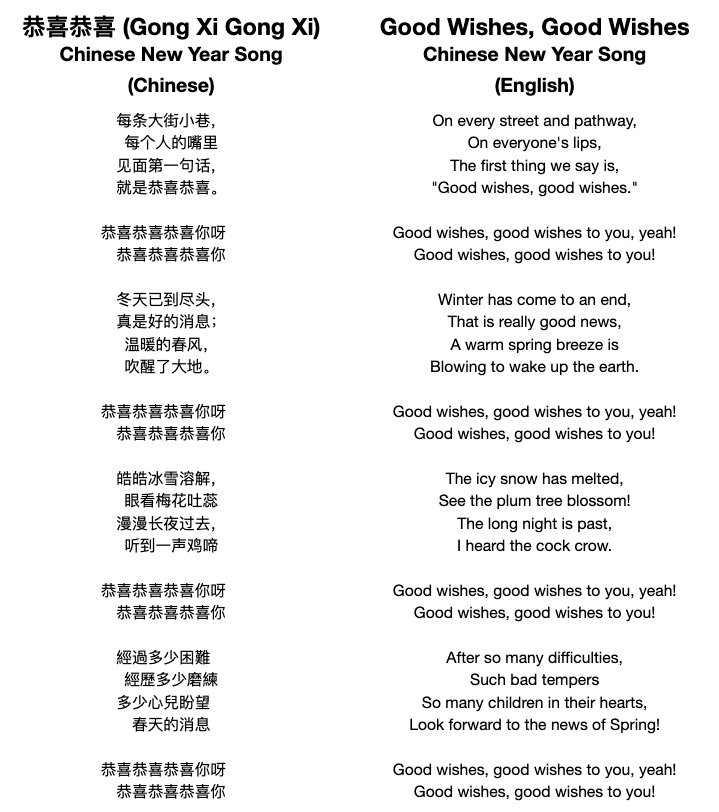
So how did this wartime song become associated with the Lunar New Year? The song’s title, ‘Gong Xi, Gong Xi’ is a common New Year greeting. The lyrics of the song also include many mentions of the arrival of spring, which is symbolic of the arrival of the New Year. Learning about the history behind the song sheds new light on many of the lyrics. I’ve included them below:

Source: mamalisa.com

Sources:

Mama Lisa’s World: https://www.mamalisa.com/?t=es&p=3697
Resonate: https://www.weareresonate.com/2017/01/gong-xi-gong-xi-chinese-new-year-song-dark-history/
Says: https://says.com/my/lifestyle/the-dark-history-of-the-iconic-cny-song-gong-xi-gong-xi

FOLLOW US

CONTACT US: musiscola@gmail.com

©2023 by Musiscola
All Rights Reserved
Nina Simone: Mississippi Goddam

As MLK Jr. Day is approaching, we thought it would be appropriate to share Nina Simone’s protest song, “Mississippi Goddam.” The lively, up-tempo music of the song masks its much darker subject – the 16th Street Baptist Church bombing, a white supremacist terrorist attack in 1963 that killed four young girls. Simone’s song, a response to the event, laments the deaths of the young girls while also condemning all forms of racial discrimination and oppression against Blacks.

When Racial Tensions in the U.S. Were at their Worst: The ...
16th Street Baptist Church After the Bombing. Photo: Tom Self

“At first I tried to make myself a gun. I gathered some materials. I was going to take one of them out, and I didn’t care who it was,” Simone said after hearing of the Church bombing. “Then Andy, my husband at the time, said to me, ‘Nina, you can’t kill anyone. You are a musician. Do what you do.’ When I sat down the whole song happened. I never stopped writing until the thing was finished.”

This protest song is an outpouring of Simone’s frustration with racial injustice in America. In addition to the 16th Street Baptist Church bombing, this song also speaks to the murder of Medgar Evers in Mississippi (hence the title of the song, ‘Mississippi Goddam’). This music is also a personal reflection of Simone’s experience as a Black woman.

“Hound dogs on my trail // School children sitting in jail // Black cat cross my path // I think every day’s gonna be my last.”

Nina Simone. Photo: Tom Copi/Michael Ochs Archives/Getty Images

Music has been and continues to be a vehicle for social change. It’s a natural and personal form of expression that preserves and amplifies the sentiments and feelings of musicians.

Sources:

FBI.gov: https://www.fbi.gov/history/famous-cases/baptist-street-church-bombing
PBS: https://www.pbs.org/wnet/americanmasters/the-story-behind-nina-simones-protest-song-mississippi-goddam/16651/

FOLLOW US

CONTACT US: musiscola@gmail.com

©2023 by Musiscola
All Rights Reserved

Thank you to our community! Musiscola reaches over 16,000 views.

I want to begin by thanking the Musiscola community. On our YouTube channel, we have surpassed 16,000 views, 500 hours of watch time, and almost 300 subscribers. This is a huge accomplishment, and if it wasn’t for your support, this would not have been possible.

This has been a challenging year amidst social injustice and the ongoing COVID-19 pandemic.

Below, I have included a few pieces that I, personally, have found joy in over these past two years. If you have a few minutes, take a short pause in your day to listen. I hope everyone stays safe and healthy and finds solace in music as I do.

Best wishes for a very happy 2022.

FOLLOW US

CONTACT US: musiscola@gmail.com

©2023 by Musiscola
All Rights Reserved

Ma’oz Tzur

Ma’oz Tzur, Gideon Zelermyer with the Montreal Symphony Orchestra

This past Sunday, I was listening to WRTI and heard this song on the radio. It was part of a Chanukah special that was airing (happy third night of Chanukah to those who celebrate). ‘Ma’Oz Tzur’ (Rock of Ages) is a Jewish liturgical poem, or piyyut, composed in the 13th century. This song of praise is traditionally sung after the lighting of the menorah candles. It recounts the many times that God has delivered the Jews from their foes and persecutors. The fifth verse is a particularly significant verse, as it tells of the Hasmonean victory that is commemorated by Chanukah:

Menorah lighting at Grand Army Plaza in Brooklyn in 2016; Credit: Chabad of Park Slope / Chabad.org

Greeks gathered against me
then in Hasmonean days.
They breached the walls of my towers
and they defiled all the oils;
And from the one remnant of the flasks
a miracle was wrought for the roses.
Men of insight – eight days
established for song and jubilation

Kerot komat berosh bikeish agagi ben hamedata,
Venihiyata lo lepach ulemokeish vega’avato nishbata,
Rosh yemini niseita ve’oyeiv shemo machita,
Rov banav vekinyanav al ha’eitz talita.

Sources:

TheTorah.com: https://www.thetorah.com/article/maoz-tzur-and-the-end-of-christianity
Trmarvin.org: https://trmarvin.org/a-closer-look-at-maoz-tzur/

FOLLOW US

CONTACT US: musiscola@gmail.com

©2023 by Musiscola
All Rights Reserved

Blues #2

Belton Sutherland: Blues #2

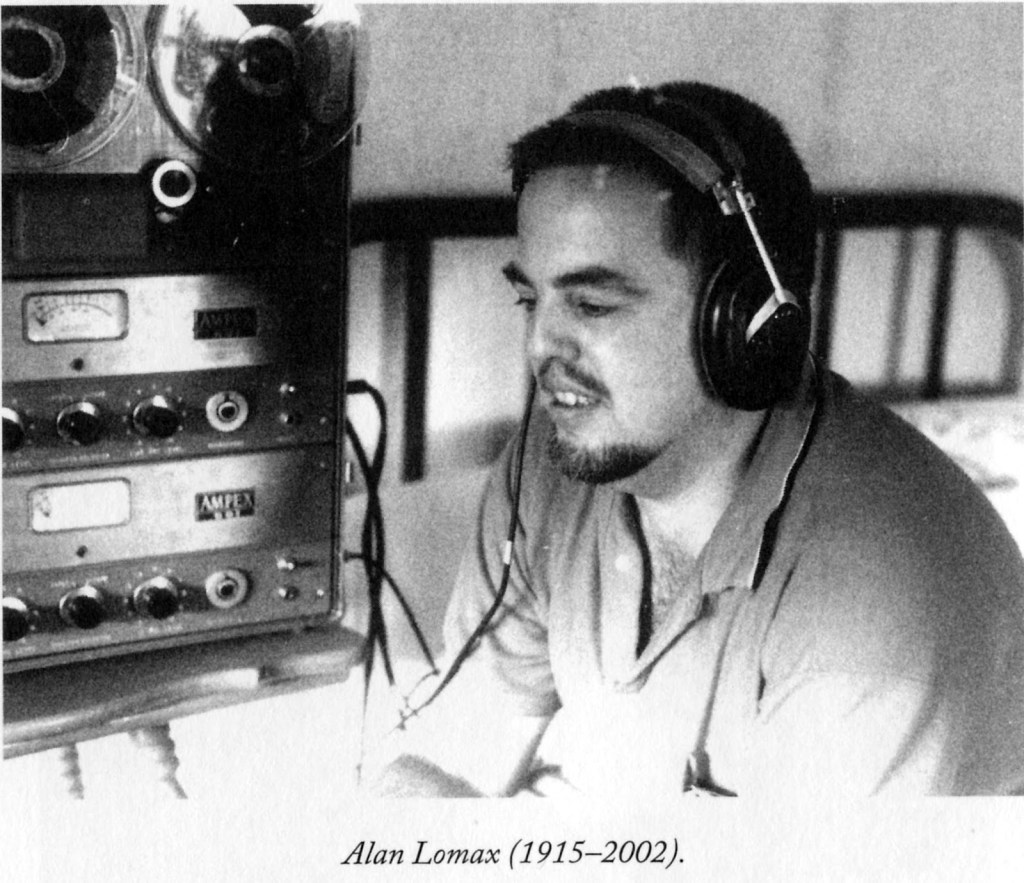
I came across this recording a few months ago when browsing videos that famed folklorist and ethnographer Alan Lomax filmed during his fieldwork in the American South. After watching it, I sought to learn more about who this man, Belton Sutherland, was – in all his cigarette-smoking, foot-tapping, cap-wearing glory. I soon found that there is shockingly little about him on the internet, despite his ‘Blues #2’ having over 2 million views on YouTube. However, here’s some of what I learned:

Belton Sutherland was born to a family of sharecroppers in 1911. This recording of him was shot by John Bishop, Worth Long, and Alan Lomax in 1978 as part of a PBS documentary called The Land Where the Blues Began. The documentary details Lomax’s pursuit of Southern folk music through the Mississippi Delta and examines traditional country blues in its native environment: levee camps, churches, and on front porches (where we see Sutherland). The documentary effectively shines a light on musicians unknown outside the Delta. Southern Blues is a really rich subject with an amazing history, and this video is just a taste of it.

Ethnographer and Folklorist Alan Lomax

Sources:

Mount Zion Memorial Fund: https://www.mtzionmemorialfund.org/p/the-unmarked-grave-of-belton-sutherland.html

FOLLOW US

CONTACT US: musiscola@gmail.com

©2023 by Musiscola
All Rights Reserved

Storytelling Through Music

Please note that the following blog contains spoilers from the movie Ratatouille.

Ratatouille. It’s my favorite Pixar movie without a doubt and for one particular reason. Yes, the movie has an amazing screenplay and stunning animation. However, Michael Giacchino’s soundtrack is what makes the movie truly memorable for me. Ratatouille’s captivating and diverse score is vibrant and serves to enrich the meaning of the film. 

Michael Giacchino (Attractions Magazine)

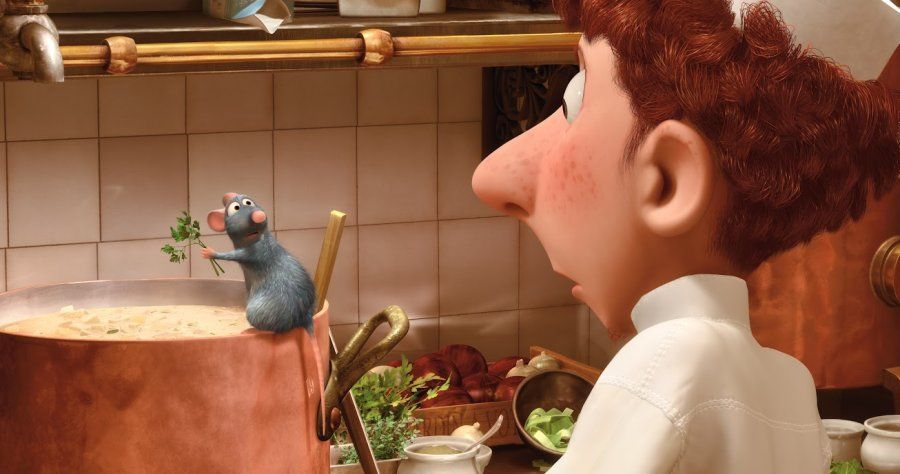
Le Festin, the film’s main theme song sung by French artist Camille, tells the story of Remy and his aspirations of becoming a chef. The absurdity of Remy’s fantasy is reflected through the dreamlike quality of this song. Le Festin begins slowly, with solely the vocals, then gradually builds with the addition of other instruments. A guitar adds sounds that give the song a lullaby-like quality at times, while Camille’s voice blissfully floats over the instrumental accompaniment. The song comes to an end peacefully and imparts the feeling of waking up from a sweet dream in a sunbathed Paris apartment.

Remy’s fantasies and desires are also seen in the lyrics. There is one line from Le Festin that I love, “L’espoir est un plat bien trop vite consommé.” This translates to “hope is a dish far too quickly consumed.” Throughout the film, Remy’s fantasy and hope of becoming a chef engross him to the extent that he will do anything to cook, often with complete disregard for his safety. This is evidenced several times: Remy cooks a mushroom on a lightning rod during a storm, steals spices from an elderly woman’s home, which (spoiler) doesn’t end well, and secretly adds ingredients to a soup in Gusteau’s restaurant. The lyrics of the song mirror what Ratatouille is about – pursuing one’s dream with passion.

Remy adds ingredients to a soup in Gusteau’s (Pixar)

Wall Rat is another one of my favorite tracks from the movie. It serves as an example of when musical scoring reflects on-screen actions. This track plays when Remy escapes the sewers and is running through the walls of Paris. As he scurries up metal pipes, a twittering flute accompanies him, playing ascending notes that mirror his actions. The music captives me and makes the scene not only exciting to watch, but to listen to. By the time Remy leaves the claustrophobic walls and reaches the top of the roof revealing a stunning Paris skyline, I am fully engaged. The music has now become more melodic, and a guitar has joined the other instruments, adding French flair to the orchestral instrumentation.

One of the things that makes Ratatouille’s soundtrack so powerful is its ability to tell a story independent of any visual accompaniment. The score conveys the emotions, aspirations, and actions of the characters, while contributing to the meaning of the film. Music has the ability to convey feelings and sentiments when other forms of communication fail. Giacchino’s soundtrack, as Ego might say, is “nothing less than the finest.”

Le Festin, by Camille, from Ratatouille

Sources:

The Dispatch: https://hhsdispatch.com/1940/pop-culture/more-than-a-vegetable-dish-ratatouille-soundtrack-review/

FOLLOW US

CONTACT US: musiscola@gmail.com

©2021 by Musiscola
All Rights Reserved
Pioneering the Seattle Sound

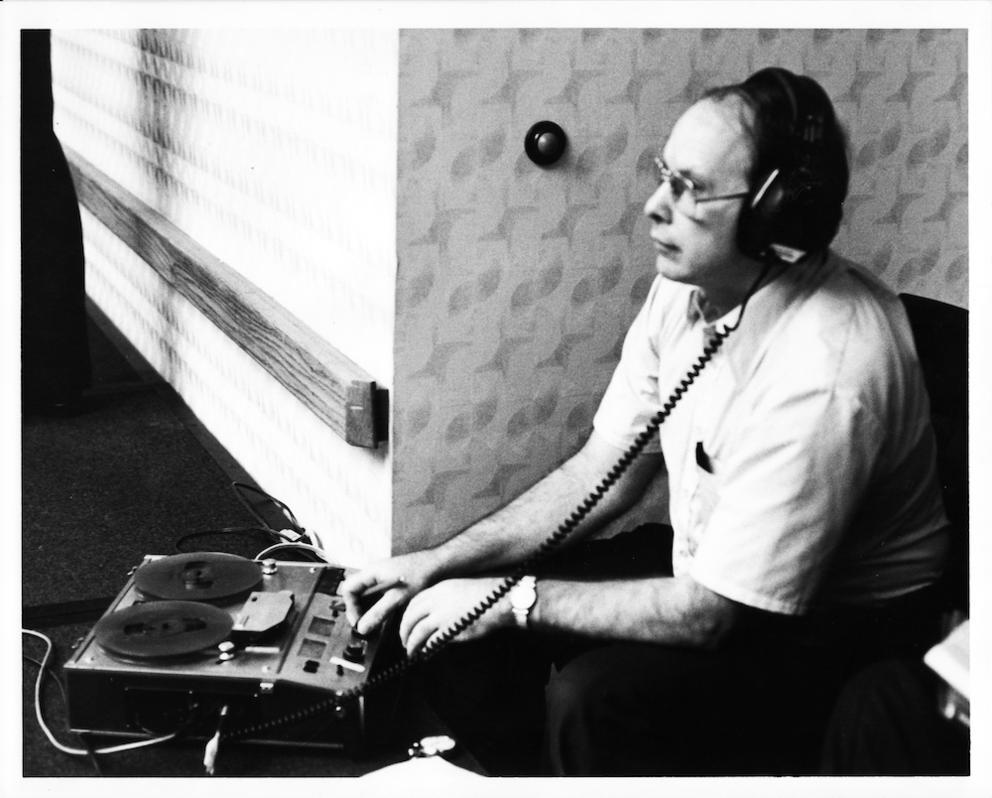
Architect of the Northwest Sound. It’s a lofty description attributed to Kearney Barton, a Seattle-based recording engineer. But what does it mean? And what did Barton do to receive such acclaim? Light in the Attic Records’ compilation, Kearney Barton: Architect of the Northwest Sound, makes it clear. The 29-track album serves as a raw, comprehensive document of the Seattle music scene through the 1960s, ’70s, and ’80s, recorded with the microphones of the trailblazing Kearney Barton.

Kearney Barton, beloved Seattle recording engineer (Credit: Light in the Attic Records)

In his 50 years as a recording engineer, Barton welcomed a variety of musical artists into his studio: The Sonics, Ann and Nancy Wilson (of the rock band Heart), and Quincy Jones, among others. A tape of a rumored 1961 session with Jimi Hendrix is even said to exist, although it hasn’t been found. But Barton would record just about anyone who wanted a tape; sessions weren’t only reserved for larger-than-life figures like Quincy Jones. Unknown ’60s neighborhood garage bands, local funk acts, country-folk duos, and gospel choirs were all welcome. Barton embraced all kinds of music genres with open arms as evidenced by the eclectic artists who set foot in his studio. He provided a welcoming environment and was known for his wit and humor, as well as his love for baking. He was famous for his oatmeal cookies and apple pies in the music community.

Barton’s recordings always have a pure and unadulterated aspect to them. The mix is minimal and whenever I listen to any of his tapes, I always feel as if I am in the room with the musicians – an audience member in a private performance. The sound is reminiscent of NPR’s Tiny Desk concerts, a video series featuring various musical artists that is known for its intimate and personal recording settings. ‘Architect of the Northwest Sound’ isn’t a polished studio album. The tracks’ sound, which would later be attributed to the Northwest thanks to Barton’s work, is raw with a hardcore analog signature. But Barton’s recordings were never about being perfectly polished. They were about providing bona fide representations of the musical artists.

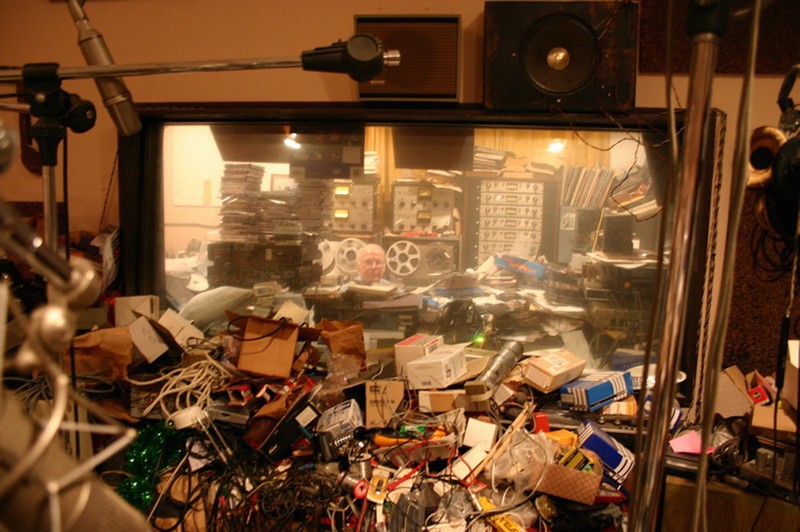
Barton in his studio (Credit: Tape Op)

At the time of his passing in 2012, there were over 7,000 reel-to-reel tapes covering Barton’s famously cluttered studio and home from decades worth of recording sessions. The University of Washington catalogued these tapes and with the help of Light in the Attic Records, ‘Architect of the Northwest Sound’ was born. Barton lived in Seattle for most of his life. He had a love for the city; an avid sports fan, he held season tickets to UW football, the Seahawks, SuperSonics, and Thunderbirds. He also enjoyed watching hydroplane races and attending Seafair. As Seattle changes with time, like many other urban areas in the US, Barton’s lifework only become more important. It serves as a sound history of the city — and an authentic one.

Barton’s famous oatmeal cookies (Credit: Tape Op)

Below are two tracks from the album, ‘Architect of the Northwest Sound‘ from Light in the Attic Records.

Bold Soul Sister, Bold Soul Brother – The Black On White Affair
Flying Bird – Tropical Rainstorm

Interested in listening more? Find the rest of the album on YouTube:

Spotify: https://open.spotify.com/album/2NHxwwEBijCd9VytSavaV0?si=Ry0Xzi0hTVGG87tmQlZQyQ&dl_branch=1

Apple Music: https://music.apple.com/us/album/kearney-barton-architect-of-the-northwest-sound/1496448055

Sources:

Aquarium Drunkard: https://aquariumdrunkard.com/2020/03/04/kearney-barton-architect-of-the-northwest-sound/
Bear Family Records: https://www.bear-family.com/various-kearney-barton-architect-of-the-northwest-sound-2-lp.html
Northwest Music Scene: https://www.northwestmusicscene.net/review-kearney-barton-architect-of-the-northwest-sound/
Puget Sound Media: https://pugetsound.media/2020/09/29/kearny-barton-architect-of-the-nw-sound/?sfw=pass1628558837
The Stranger: https://www.thestranger.com/slog/2020/02/04/42761532/light-in-the-attics-kearney-barton-architect-of-the-northwest-sound-celebrates-the-seattle-studio-legends-productions
Tape Op: https://tapeop.com/interviews/83/kearney-barton/

FOLLOW US

CONTACT US: musiscola@gmail.com

©2021 by Musiscola
All Rights Reserved

Yo-Yo Ma and Songs of Comfort

“Going Home,” a video from Yo-Yo Ma’s #SongsOfComfort series

Last spring, I stumbled upon Yo-Yo Ma’s #SongsOfComfort performance series when aimlessly surfing the web, stuck at home like many others during the COVID-19 pandemic. For those of you who do not know, #SongsOfComfort is a project launched at the beginning of the pandemic by internationally renowned cellist, Yo-Yo Ma. Ma posted videos on YouTube and other platforms of himself playing “songs of comfort” to ease anxiety and fear. Soon, these videos became my refuge. I discovered these videos at a time when the world was in disarray. People had lost their jobs. The graph of COVID cases resembled a spire. The words “uncertain,” “difficult,” and “challenging” had all surged in popularity. It was as if our delicate blue marble had been plunged into an ice bath; everything was shocked into disorder and chaos. Many of us were questioning whether this changed world would be the “new normal.”

But the series of videos that Ma created is nothing short of incredible. Whenever I listen to one of his videos, I forget about the current events of the world. The rich notes of the cello cut through all the worries that I am feeling and add warmth to the air. The music creates a sense of unity, as it’s a universal language and something that all humans can understand. I can’t help but think back to the videos that circulated the internet last year of the impromptu performances that musicians gave during lockdown on the balconies of their apartments as onlookers watched. It doesn’t matter who you are, how old you are, or what language you speak. Music is something that anyone can feel and appreciate and that in itself makes music something that is unique and unitive. With his music, Yo-Yo Ma manages to bring people together – even when we are all far apart. 

Two teachers at an Italian music school serenade their neighbors

FOLLOW US

CONTACT US: musiscola@gmail.com

©2021 by Musiscola
All Rights Reserved